What Is Your Self-View—and Why Is It So Important?
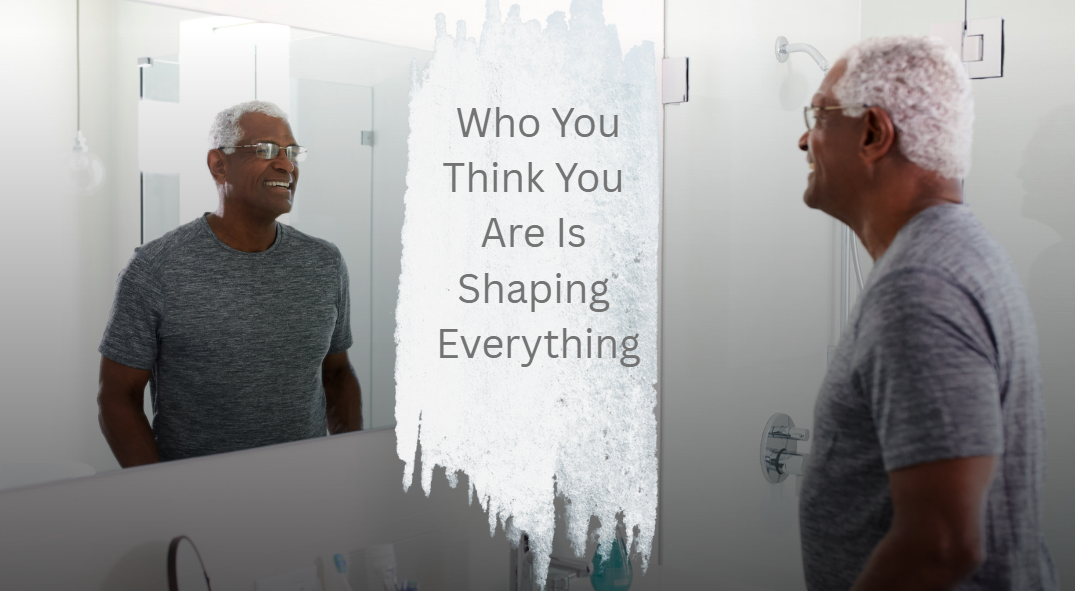
There’s a version of you that shows up before you do. It’s the part of you that “reads the room” fast. That decides whether you’re safe, whether you belong, whether you should speak up, whether you should stay quiet, whether you can rest, whether you need to prove yourself. Psychologists call this your self-view (also known as your self-concept). It’s the internal story you carry about who you are—your beliefs, opinions, strengths, limits, preferences, and the roles you’ve learned to play in order to be accepted and survive. And it matters because your self-view doesn’t just influence how you feel about yourself.
It shapes how you interpret life. It quietly impacts what you go after, what you avoid, what you tolerate, what you over-function for, and what you assume you “have to” do to be worthy. If you’ve ever said, “That’s just who I am,” this is what we’re talking about.
Your Self-View Is a Filter (Not Just a Thought)
Two people can experience the same situation and walk away with completely different
meanings.
One person hears feedback and thinks: “Okay. That was uncomfortable, but I can learn.”
Another hears the same feedback and thinks: “I knew it. I’m not good enough. I don’t belong here.”
Same moment. Different outcome.
That’s the power of self-view. It’s not only what you believe about yourself—it’s how you
make meaning of what happens to you. When your self-view is supportive and grounded, you can take in information without it
turning into a character assassination. When your self-view is harsh or fragile, even neutral moments can feel like proof that
you’re failing. This is one of the reasons self-view work is not “fluffy.” It’s foundational.
Because your self-view influences:
How you show up under pressure
How you recover from mistakes
How you set boundaries (or don’t)
How you handle conflict
How you lead
How you love
How you rest
It’s the internal foundation underneath your confidence, your capacity, and your choices. Where Self-View Comes From (And Why It Makes Sense) You were not born with a fully formed identity story. Your self-view is learned over time, and it’s shaped by:
your early relationships and family roles (the strong one, the helper, the peacekeeper, the achiever)
Messages you received about worth, success, and belonging
How you were responded to when you had needs or emotions
School environments, social dynamics, and performance expectations
Culture and community norms (spoken and unspoken)
Workplace systems that reward overwork and over-functioning
Experiences of being the only one, being underestimated, or needing to “prove” yourself
For many high-responsibility people, self-view can become something like:
“I can’t let people down.”
“I need to be the reliable one.”
“Rest has to be earned.”
“If I don’t do it, it won’t get done right.”
“I can’t show weakness.”
And I want to say this clearly: these beliefs often started as adaptive. They helped you stay steady. They helped you succeed. They helped you survive a chapter that required a lot from you.
The issue is when those beliefs become permanent and start costing you your health, your joy, your relationships, or your ability to receive support. Sometimes what once protected you is now restricting you. Why Your Self-View Feels So “Sticky” Self-view has structure. It’s organized. Your brain likes a coherent story about who you are because it helps you make quick decisions and predict outcomes. Even when parts of your self-view are painful, the brain prefers the familiar. That’s why changing self-view can feel hard.Not because you’re not trying.Not because you don’t have insight. But because you’re working against a deeply reinforced internal pattern.
This is why:
Compliments can feel suspicious
Rest can feel like guilt
Asking for help can feel like failure
Success can feel like pressure instead of relief
Some mistake can feel like proof you don’t belong
A self-view that formed in survival mode tends to prioritize:
Control
Certainty
Approval
Performance
Self-protection
And it can take time to teach your system: “We don’t have to live like that anymore.” A Simple Example: Self-View in Real Life Let’s say your self-view includes: “I have to be competent at all times.”
That self-view can lead to:
Over-preparing
Difficulty delegating
Anxiety about being seen as “not knowing”
Avoiding new opportunities where you’d be a beginner
Interpreting questions as criticism
Or maybe your self-view includes: “My needs are too much.”
That self-view can lead to:
Minimizing what you want
Saying yes when you mean no
Feeling guilty when you set boundaries
Choosing relationships where you’re always the one accommodating
Struggling to advocate for yourself at work
Your self-view doesn’t just live in your head. It shows up in patterns. If you want to understand your self-view, don’t only listen to your thoughts. Look at your repeated behaviors, your stress responses, and what you consistently tolerate. That’s where the truth usually shows up. The “Classic Psychology” Piece (But Make It Useful). Psychologists have studied the self for a long time because it’s central to human behavior.
Freud’s model is one way of describing how internal forces shape us:
The id (wants relief and comfort now)
The ego (tries to balance reality, needs, and consequences)
The superego (the conscience and “shoulds”)
Whether you love Freud or not, the useful takeaway is this:
Most of us have multiple voices inside.
There’s the part of you that wants ease.
There’s the part of you that tries to be responsible.
There’s the part of you that holds high standards.
There’s the part of you that is tired.
Self-view is often what happens when one of those parts becomes the “manager” of your identity and starts running the whole system. For example, if the superego voice (the “should” voice) has been in charge for a long time, your self-view can become strict, perfectionistic, and hard to please. So the goal isn’t to get rid of parts of you.
The goal is to lead yourself with more balance.
Three Key Truths About Self-View
1) You Learn Your Self-View
You weren’t born believing you were “too much” or “not enough.” That got taught,
reinforced, or modeled. And because it was learned, it can be updated.
2) Self-View Has Structure
Your self-view might look different in different settings:
at work
in relationships
under stress
when you’re criticized
when you’re praised
But there’s usually a core story underneath it all.
3) Self-View Can Change
It’s not always quick, but it is possible. Change happens through repetition, repair, and evidence. You do not have to wait for a major life event to “become someone new.” You can update your self-view intentionally. How to Strengthen Your Self-View Without Becoming Fake or Performative. At Spero, we don’t do forced positivity. We do accuracy.
Here’s a grounded way to start:
Step 1: Catch Your Default Identity Statements
Pay attention to the phrases that show up when you’re stressed:
“I’m behind.”
“I’m failing.”
“I’m not built for this.”
“I can’t trust myself.”
“I always mess things up.”
“I have to carry this.”
These aren’t just thoughts. They’re identity claims.
Step 2: Ask: “Where Did I Learn This?”
This isn’t about blaming your upbringing, your culture, your past relationships, or your workplace. It’s about context. Many self-views formed in environments where you had to:
excel to be seen
stay small to be safe
be responsible to be loved
anticipate needs to avoid conflict
That version of you did what they had to do.
Step 3: Replace Absolutes With Supportive Accuracy
We’re not jumping to “I’m amazing.” We’re moving from harsh conclusions to grounded
truth.
Try replacing:
“I always mess up” → “I’m human. I can repair and recover.”
“I’m not enough” → “I’m not here to earn my worth.”
“I can’t slow down” → “My body is allowed to have limits.”
“If I rest, I’ll fall behind” → “Rest is part of sustainability, not a reward for burnout.”
This is how self-view changes: not through one perfect affirmation, but through repeated, believable truth.
Reflection Prompts for This Week
If your self-view had a headline lately, what would it be? Then try these questions:
1. What do I believe I must do to be worthy or accepted?
2. What role did I learn to play, and what is it costing me now?
3. What belief about myself feels true, but might actually be old?
4. What would a more supportive self-view sound like—without losing my ambition?
And here’s the one I really want you to sit with: Who would I be if I didn’t have to prove myself all the time? A Spero Reframe: Self-View and Resilience
Resilience is not only about bouncing back. It’s also about having an internal identity that can hold reality without collapsing into shame.
A supportive self-view makes resilience possible because it says:
“I can face what’s true without turning on myself.”
“I can be accountable without being cruel.”
“I can have limits without being a failure.”
“I can grow without constantly moving the goalpost.”
That’s what it means to lead from within.
Closing
If you’ve been carrying a self-view built in survival mode, you’re not alone. Many people are achieving, leading, parenting, and performing at a high level while internally living with a story that keeps them in pressure, not peace. At Spero, we focus on culturally grounded resilience—tools and language that help you build capacity and self-trust, not just keep pushing.
Start small this week.
Pick one sentence you’re ready to stop believing about yourself. And replace it with something true enough that your nervous system can actually receive it.